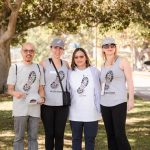
Interview with Todd Angelucci
Interview with Todd Angelucci
Todd Angelucci was 48 and feeling great both mentally and physically. He is a runner and practices martial arts. He enjoys helping people as a nurse by profession. 5 years ago, while at work caring for a patient, Todd’s vision became blurry and stayed that way for about 5 minutes. It really unsettled him. At first, he thought his blurred vision might be caused by the mask he was wearing, or possibly that he was dehydrated. However, it unnerved him so much that he called his girlfriend, who is also a nurse. She told him to contact his primary care physician, who recommended he call his eye doctor. He told him he had experienced an “ocular migraine”. Todd hadn’t had any prior issues with headaches or migraines, but it could be something else. He was told to go to the emergency room if the blurred vision or anything else unusual reoccurred. That recommendation was further reiterated when he visited his buddy, a chiropractor, for a tune up. When he mentioned his vision scare, his buddy gave him a friendly nudge and said, “you really need to get this checked out”.
Then a few days later after a run and a warm shower, Todd noticed his left hand felt strange and he wasn’t sure what was happening but again, it seemed an unusual and unsettling experience. He wondered if he was having a stress response since working in a hospital during Covid was extra challenging. This time he went directly to the local hospital ER. They wanted to do a CT scan to rule out a stroke. Then they added contrast which he understood meant the doctors had a heightened concern. After the scan the scan the ER doctor comes in and sits next to him and says “You know Todd, you’re not going crazy. You have a marble sized tumor in your head.”
He said he will never forget what happened next. He stood up, walked across the little room, looking up and said “this sucks” with tears streaming down my face. To which both the doctor and nurse, looked at him and said, what felt like a deafening sound, “We’re so sorry!” That was a defining moment for him. He hasn’t used those words when working with patients anymore, Instead, he says “this is so hard” because it is so hard! Suddenly, Todd’s world changed. A Neurosurgeon came to see him and conduct a neuro exam. He explains the next step is to admit Todd to the hospital to run some additional tests. Except for the tumor, Todd is otherwise healthy and doesn’t take any medications. He was appreciative that despite covid restrictions the hospital allowed his girlfriend to join him and help him process all this new and difficult information as he was completely shell shocked. The following morning the brain surgeon explained they are unsure of his prognosis and will be presenting his case to the Tumor Board. In the meantime, they run a few more tests so that he is ready for surgery at a larger hospital complete with more Neurosurgeons and brain tumor resources than the community hospital he was in. At this point, the oncologist is still trying to determine if his tumor was a primary or secondary tumor.
Upon discharge, Todd goes home feeling overwhelmed by the news of his brain tumor and how his life, however long, is forever changed. He realizes he is experiencing the proverbial brain tumor scenario. How will he handle and accept this fate? At his next appointment with the neurosurgeon, with tears coming down, he is told,
“Todd it’s hard. I don’t know what it is but it’s gotta come out. We’ll make a plan to get this out. I’m going to put you on some steroids now because you have swelling around the tumor.”
Coincidently, this doctor is the only one who notices Todd’s a functional deficit in his left hand that prevented him from doing some ordinary tasks. By now it’s been about two weeks since he first experienced the blurry vision. The neurosurgeon explains the 5% risk of coma, stroke or death. To which Todd replies, 95% success is what he will focus on.
After spending some soul-searching time accepting his reality, Todd decides it was time to figure out what and how he is going to learn from this heartbreaking situation. Obviously, it made him reevaluate and asses his priorities. He says he knows that he has been blessed so far and includes meeting fellow brain tumor folks as a gift too. He has more awareness of his life having an expiration date and a Brain Tumor. He started to prioritize what he wants and how to do it, regardless of worst-case scenarios. While he knows his life has changed, he feels extra grateful being around supportive people and who have helped him deal with this experience.
For his tumor removal surgery, it was still COVID, and he arrives to face his procedure alone. He has a special mapping done of the tumor location. The surgeon and staff were huddled over him discussing their plan while he was still awake, then the next thing he remembers was waking up and being able to move his hands, no tube in my throat and he was hungry. When the surgeon came to see him, he had good news. The surgery went well. They got 99% of the tumor out. Now they needed to determine the type and what stage/tumor so they could devise a treatment plan. Due to inflammation around the tumor scar, the doctor prescribed Steroids. Covid concerns and the hole in his head made for some difficult days – it’s a strange phenomenon having a hole in your head. The Steroids caused some extra psychological challenges too. After a few days healing, additional scans and medical support Todd was released and able to go home. The steroids caused some emotional distress but once he was off those, he felt much better and was able to walk around and do most things.
Todd explains his two phased mindset perspective. First, his goal was to live through surgery. He did that. Then the second phase was to deal with the prognosis and live his life. His tumor is called pilocytic astrocytoma benign Grade 1. While it isn’t the best type of tumor, it certainly wasn’t the worst. The Surgeon told him he was lucky that it wasn’t a glioblastoma. He won’t need chemo or radiation, but he will need to be followed by neurooncologist, for his non-cancerous tumor. He was assigned a series of scans, a nurse navigator, and a psychologist as part of his treatment. It gave him a new perspective on his life and situation. His Doctor tells him he studied his tumor extensively and would like to use it for research because it’s a rare type of tumor, but he is seeing an increase in cases in Connecticut, which he found interesting. They do another scan but can’t tell if the tumor is growing or if the shifting is scarring but not a concern. Now, once a year he goes in for rechecks with a neuro oncologist. His condition is stable, and he is so grateful. He is able to work, do his podcast, and get back to his life for the most part. Todd’s podcast was what connected him to Heart of the Brain.
Todd’s mindset was to give back and help others. His podcast and his job as a nurse are ways he can give back. He provides home health care nursing and uses his own personal experience to help people, including working with Hospice patients. Now he feels he has a somewhat deeper understanding of what it feels like to look at a future date and realize that you might not be around for it. He says it’s very powerful and motivating. One thing that happens is perspective! It becomes embedded in your brain you just keep everything in perspective because at any time life could change.
Another thing he’d like to share is “runway time”. He is more than four years out, but he still gets “scan anxiety” before each MRI. While his life has returned to normal there are many things he wants to do, like travel. He’s not waiting to do things anymore. He doesn’t feel any lasting repercussions from the scar tissue. He has feeling and sensation back in his hands and feels back to himself. He questions his memory now though and it’s sure if when he is forgetful, it is due to his tumor and surgery or just part of the aging process. He continues to do nursing 3 days a week, so he doesn’t tire himself out.
Today at 53, his parting words of wisdom were, “For me I think I’ve faced like looking at my death. When I did Hospice, I started to learn that dying is not that hard. I learned that how you live your life is kind of how you die which is interesting. Often people live with regrets, but they don’t live fully”